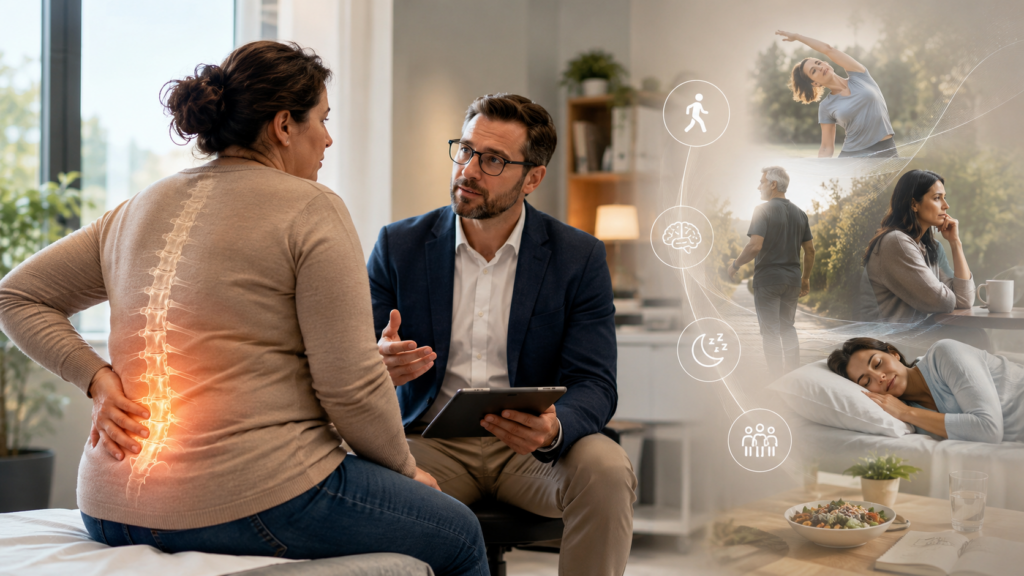
A recent IPSIS Research Spotlight examines the relationship between body mass index, or BMI, and patient-reported outcomes among individuals living with spine pain. The findings add important context to how clinicians evaluate the impact of obesity in patients with back and neck conditions, while also emphasizing the need to avoid overly simple conclusions.
One of the key findings is that obesity may have a stronger association with functional limitations and overall biopsychosocial burden than with pain intensity alone. In other words, a patient with a higher BMI may not necessarily report dramatically greater pain, but may experience more difficulty with mobility, daily activities, physical conditioning, sleep, mood, or quality of life. This distinction is important because pain severity does not always reflect the full impact of a spine condition.
Spine pain is influenced by many factors. Structural diagnoses, age, activity level, medical comorbidities, psychological health, sleep quality, occupational demands, and social circumstances can all affect how a patient experiences symptoms and responds to treatment. BMI may be one relevant part of this picture, but it should not be viewed in isolation.
For clinicians, the research supports a comprehensive, patient-centered approach. Evaluating a person with spine pain should involve more than reviewing imaging or asking for a pain score. Functional capacity, emotional well-being, physical activity, weight-related health concerns, and barriers to recovery should also be considered. A higher BMI may identify patients who could benefit from additional support, but it does not automatically explain the cause or severity of their symptoms.
Weight discussions should also be handled respectfully. Patients may already feel blamed or discouraged, especially when pain limits their ability to exercise. Shared decision-making can help establish realistic goals, such as increasing activity gradually, improving nutrition, addressing sleep, and reducing fear of movement. These steps may support better overall health even before substantial weight loss occurs.
The study also reinforces the potential value of multidisciplinary care. Depending on the patient, treatment may include interventional pain procedures, physical therapy, gradual exercise, weight-management support, behavioral health care, medication optimization, sleep improvement, and management of related medical conditions. The goal is not simply to reduce a number on the scale, but to improve function, comfort, resilience, and participation in daily life.
At the same time, the current evidence cannot establish BMI as an independent driver of worse spine pain outcomes. Associations found in research do not prove that obesity directly causes greater disability or biopsychosocial distress. Other health and lifestyle factors may contribute to both higher BMI and poorer outcomes.
More rigorous, longitudinal research is needed to clarify how obesity influences the course of spine pain, recovery, and response to treatment over time. Future studies may help identify which patients benefit most from targeted weight-related interventions and how those strategies should be integrated into pain care.
For now, BMI should be considered as one part of a broader clinical assessment. The best treatment plans remain individualized, evidence-based, and focused on the whole person rather than a single measurement.