Neuroma injections are minimally invasive, image-guided procedures used to treat pain caused by neuromas—abnormal nerve growths that develop after nerve injury. These injections are commonly used in patients with Complex Regional Pain Syndrome (CRPS) and other nerve-related pain conditions.
By delivering medication directly around the affected nerve, neuroma injections reduce inflammation and interrupt abnormal pain signaling.
A neuroma is a thickened or disorganized cluster of nerve tissue that forms after nerve injury or chronic irritation. Neuromas can send persistent, abnormal pain signals to the brain, leading to severe and chronic pain.
Neuromas are frequently seen in:
When untreated, neuromas may cause progressive nerve hypersensitivity and functional impairment.
A neuroma injection involves administering a combination of local anesthetic and corticosteroid medication around the affected nerve.
The goals of neuroma injections are to:
The procedure is typically completed in approximately 15 minutes in an outpatient setting.
Neuroma injections are commonly used to treat:
These injections are particularly effective for localized nerve pain with identifiable nerve thickening.
Morton’s neuroma is a common form of neuroma affecting the foot, typically between the third and fourth toes. It involves thickening of tissue around a plantar nerve.
Symptoms of Morton’s neuroma include:
Injection therapy can significantly reduce inflammation and nerve irritation in Morton’s neuroma.
Patients with CRPS may experience:
Neuroma injections can reduce sympathetic nerve overactivity and improve pain control.
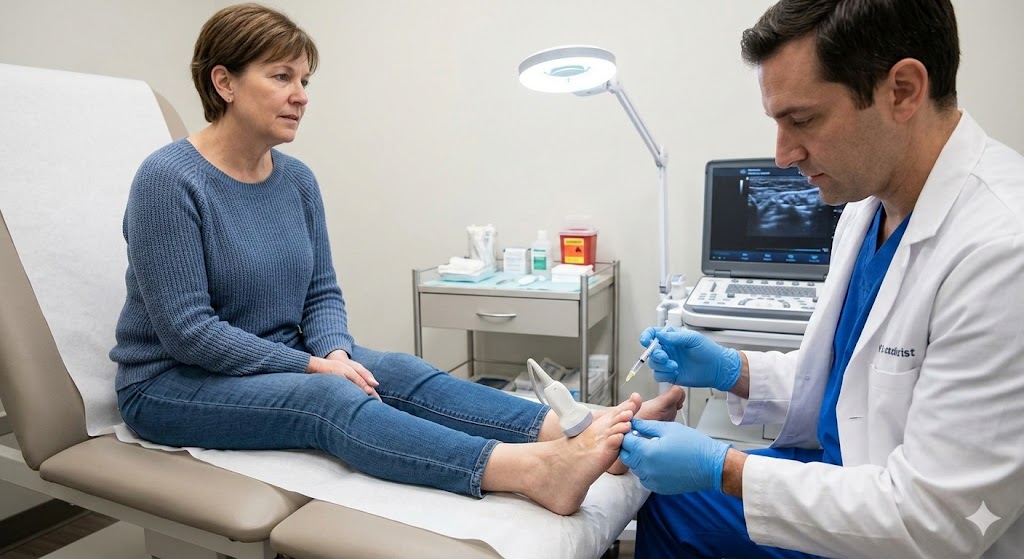
Neuroma injections are performed in an outpatient setting.
The procedure includes:
Many patients experience rapid pain relief due to the anesthetic, followed by longer-lasting relief from the steroid medication.
Neuroma injections may be repeated if clinically indicated.
The injection delivers local anesthetic and corticosteroid medication around the affected nerve to reduce inflammation and block abnormal pain signals.
Neuroma injections are commonly performed in the foot for Morton’s neuroma but may also be used in other areas where painful nerve clusters have formed.
The injection typically takes about 15 minutes and is performed in an outpatient setting.
Temporary relief may occur immediately from the anesthetic. Longer-lasting improvement usually develops within a few days as inflammation decreases.
Neuroma Injections is available at our Jersey City, NJ office at 100 Town Square Place, Suite 405. Serving patients from Hoboken, Bayonne, Weehawken, and surrounding Hudson County communities. Learn more about pain management in Jersey City.
Reach out to our specialists to schedule an initial consultation. We’ll carefully review your symptoms and match you with the right expert for your specific condition.
CLINIC LOCATION
100 Town Square Place, Suite 405
Jersey City, NJ 07310
DIRECT CONTACT
(908) 665-1938
infor@urbanspinejoint.com