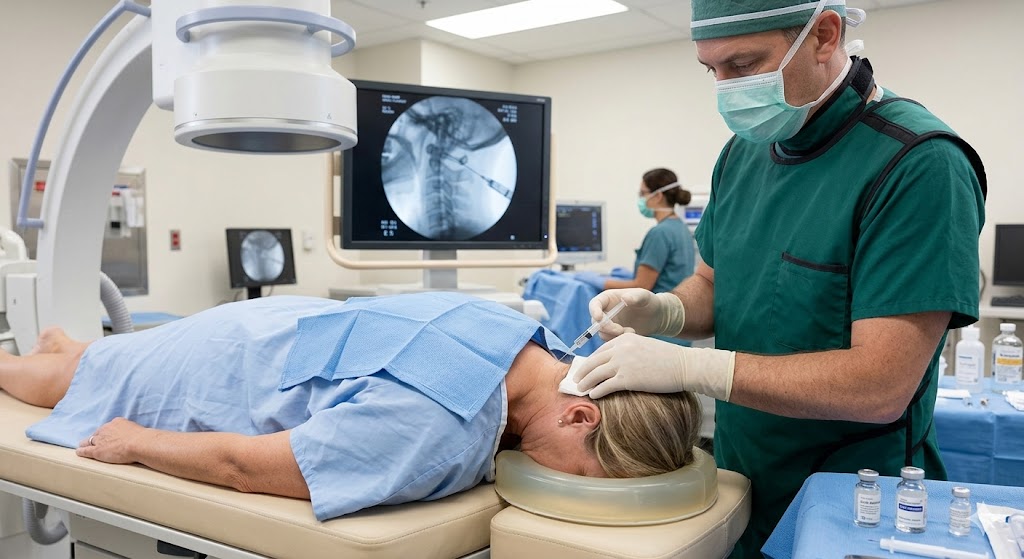
Percutaneous adhesiolysis, also known as epidural lysis of adhesions, is a minimally invasive spine procedure used to treat chronic low back pain and lumbar radiculopathy that has not responded to conservative therapy. It is commonly recommended for patients with persistent nerve-related pain following spine surgery or long-standing degenerative conditions.
Lower back pain is a leading cause of disability worldwide. While many patients improve within several weeks, a subset develops chronic pain, often accompanied by radicular leg pain caused by nerve irritation or scarring.
What Is Percutaneous Adhesiolysis?
Percutaneous adhesiolysis is a procedure designed to break down epidural adhesions—scar tissue that forms around spinal nerves in the epidural space.
Epidural scar tissue can:
Trap or compress nerve roots
Interfere with medication delivery
Prolong inflammation
Cause persistent radicular pain
By mechanically and chemically disrupting adhesions, the procedure improves nerve mobility and enhances the effectiveness of injected medications.
Conditions Treated
Percutaneous adhesiolysis is indicated for patients with:
Chronic low back pain
Lumbar radiculopathy
Post-laminectomy syndrome (failed back surgery syndrome)
Epidural adhesions
Disc disruption
Vertebral compression fractures with persistent pain
Multilevel degenerative arthritis resistant to conservative care
It is particularly beneficial for patients whose symptoms persist despite physical therapy, medications, and epidural steroid injections.
Symptoms of Epidural Adhesions
Patients with epidural scarring may experience:
Persistent lower back pain
Radiating leg pain (sciatica)
Numbness or tingling in the lower extremities
Pain that worsens with activity
Limited functional capacity
These symptoms often continue despite standard injection therapy due to impaired medication spread.
Table of Contents
How the Procedure Is Performed
Percutaneous adhesiolysis is performed in an outpatient setting under fluoroscopic (live X-ray) guidance.
The procedure typically includes:
Administration of local anesthetic and sedation as needed
Placement of a specialized catheter into the epidural space
Identification of areas with scar tissue or nerve impingement
Mechanical disruption of adhesions
Injection of contrast dye to confirm proper distribution
Delivery of anesthetic, saline, and anti-inflammatory medication
The procedure duration varies but is typically completed within one hour.
Benefits of Percutaneous Adhesiolysis
Targeted disruption of scar tissue
Improved nerve root mobility
Enhanced medication delivery
Reduction in chronic radicular pain
Minimally invasive alternative to repeat surgery
Improved functional capacity
Percutaneous Adhesiolysis is available at our Jersey City, NJ office at 100 Town Square Place, Suite 405. Serving patients from Hoboken, Bayonne, Weehawken, and surrounding Hudson County communities. Learn more about pain management in Jersey City.
Begin your journey to recovery.
Reach out to our specialists to schedule an initial consultation. We’ll carefully review your symptoms and match you with the right expert for your specific condition.
CLINIC LOCATION
100 Town Square Place, Suite 405 Jersey City, NJ 07310