Cervical epidural steroid injections (CESIs) are minimally invasive spine procedures used to treat neck pain, shoulder pain, and arm pain caused by inflamed or compressed nerves in the cervical spine. These injections deliver anti-inflammatory medication directly into the epidural space to reduce nerve irritation and relieve cervical radiculopathy symptoms.
Cervical epidural steroid injections are commonly recommended for patients with persistent nerve-related pain that has not improved with physical therapy, medications, or other conservative treatments.
A cervical epidural steroid injection is an image-guided procedure in which corticosteroid medication and a local anesthetic are injected into the epidural space of the cervical spine.
The epidural space surrounds the spinal cord and nerve roots. When inflammation from a herniated disc, spinal stenosis, or degenerative changes compresses a nerve root, it can cause:
The corticosteroid reduces inflammation around the irritated nerve, while the anesthetic provides short-term pain relief.
Cervical epidural steroid injections are indicated for:
These injections are specifically designed to treat nerve root inflammation, not isolated muscular pain.
Patients who benefit from cervical epidural steroid injections often experience:
Persistent nerve-related symptoms are common signs of cervical radiculopathy.
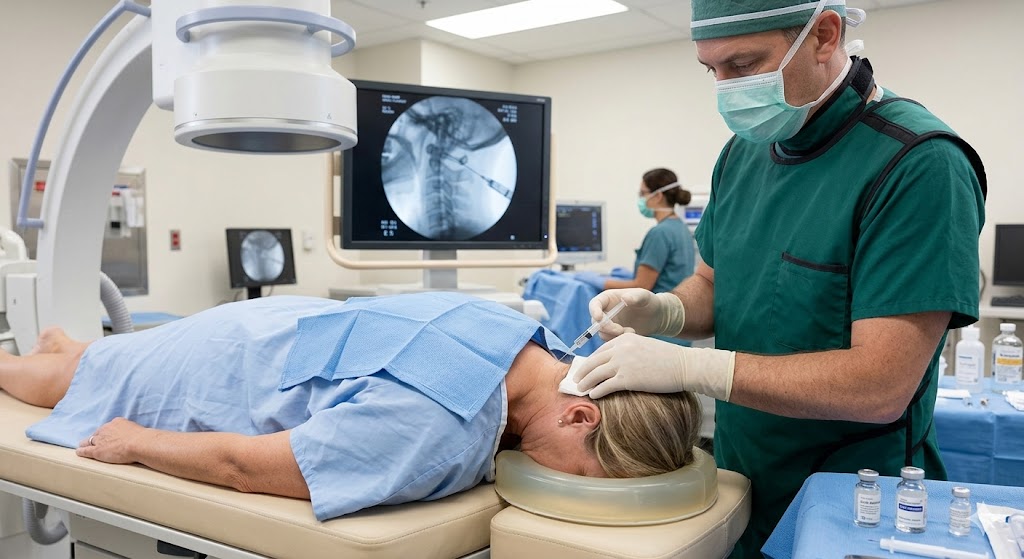
Cervical epidural steroid injections are performed in an outpatient setting under fluoroscopic (live X-ray) guidance.
The procedure typically takes 15–30 minutes.
Fluoroscopic guidance improves precision and enhances procedural safety.
Relief duration varies. Diagnostic injections provide temporary relief, while corticosteroid injections may provide weeks to months of reduced inflammation and pain.
Most patients tolerate the procedure well. A local anesthetic is used to minimize discomfort.
The injection typically takes 20–30 minutes and is performed in an outpatient setting.
Most patients resume light activities within 24 hours unless otherwise instructed.
Cervical Epidural Steroid Injections is available at our Jersey City, NJ office at 100 Town Square Place, Suite 405. Serving patients from Hoboken, Bayonne, Weehawken, and surrounding Hudson County communities. Learn more about pain management in Jersey City.
Reach out to our specialists to schedule an initial consultation. We’ll carefully review your symptoms and match you with the right expert for your specific condition.
CLINIC LOCATION
100 Town Square Place, Suite 405
Jersey City, NJ 07310
DIRECT CONTACT
(908) 665-1938
infor@urbanspinejoint.com