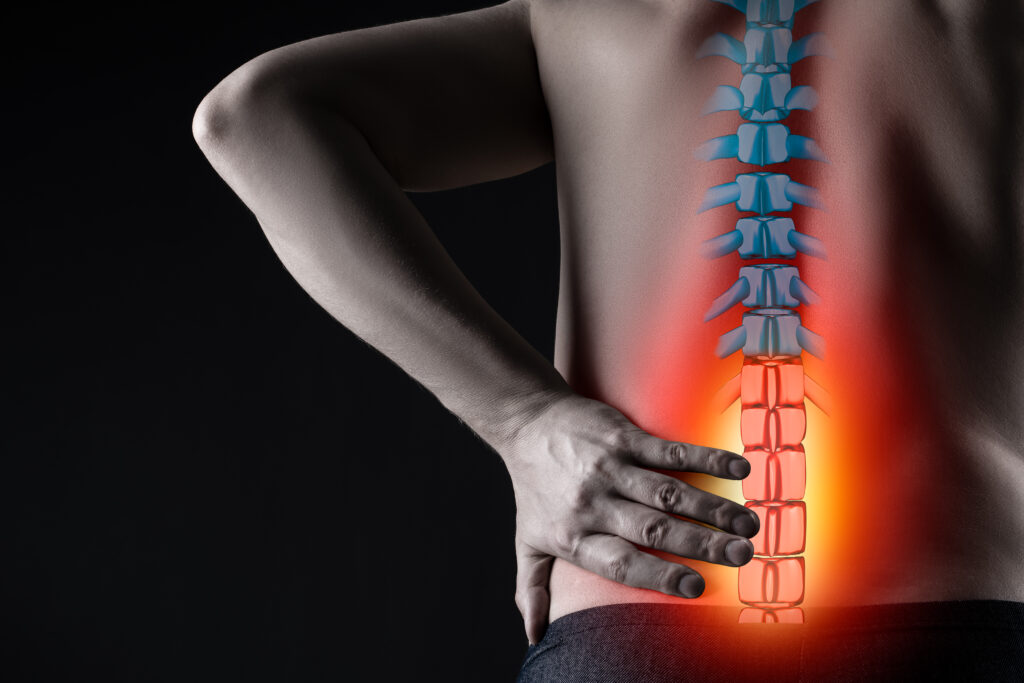
Sciatica is nerve pain that begins in the lower back and travels down one leg. It occurs when the sciatic nerve, the longest nerve in the body, becomes irritated or compressed.
The sciatic nerve forms from several nerve roots in the lower spine and runs through the buttock and down the back of each leg. When these nerve roots are compressed or inflamed, pain can radiate along the path of the nerve.
Sciatica is a symptom of an underlying spine condition, not a disease itself.
Symptoms
Sciatica symptoms typically affect one side of the body and may include:
Pain that starts in the lower back and travels down the leg
Pain in the buttock, thigh, or calf
Sharp, burning, or shooting pain along the nerve
Numbness or tingling in the leg or foot
Muscle weakness in the affected leg
Pain that worsens when sitting, coughing, or sneezing
The pain can range from mild discomfort to severe nerve pain.
Piriformis syndrome, where the piriformis muscle irritates the sciatic nerve
Risk factors that increase the likelihood of sciatica include:
Aging and spinal degeneration
Obesity or pregnancy
Diabetes
Repetitive heavy lifting
Diagnosis
Diagnosis begins with a medical history and physical examination. A doctor will evaluate pain patterns and check muscle strength, reflexes, and sensation.
Tests may include movements that stretch the sciatic nerve, such as the straight leg raise test.
Imaging tests may be used to identify the cause of nerve compression, including:
MRI scans to detect disc herniation, nerve compression, or soft tissue problems
CT scans for detailed views of spinal structures
Diagnostic nerve root injections to confirm the source of pain
These tests help determine the exact cause of sciatica.
Treatment Options
Treatment for sciatica usually begins with conservative care.
Common treatment options include:
Over-the-counter pain medications
Cold and heat therapy
Stretching and gentle movement
Physical therapy to strengthen supporting muscles
Chiropractic care or acupuncture
If symptoms continue, steroid injections may be used to reduce inflammation around the affected nerve.
Surgery may be necessary in severe cases, especially if there is progressive weakness, severe nerve compression, or loss of bowel or bladder control.
When to Seek Evaluation
Persistent lower back pain, neck pain, or radiating nerve pain should not be ignored. Early evaluation allows for proper diagnosis and targeted treatment, helping prevent progression and long-term complications.