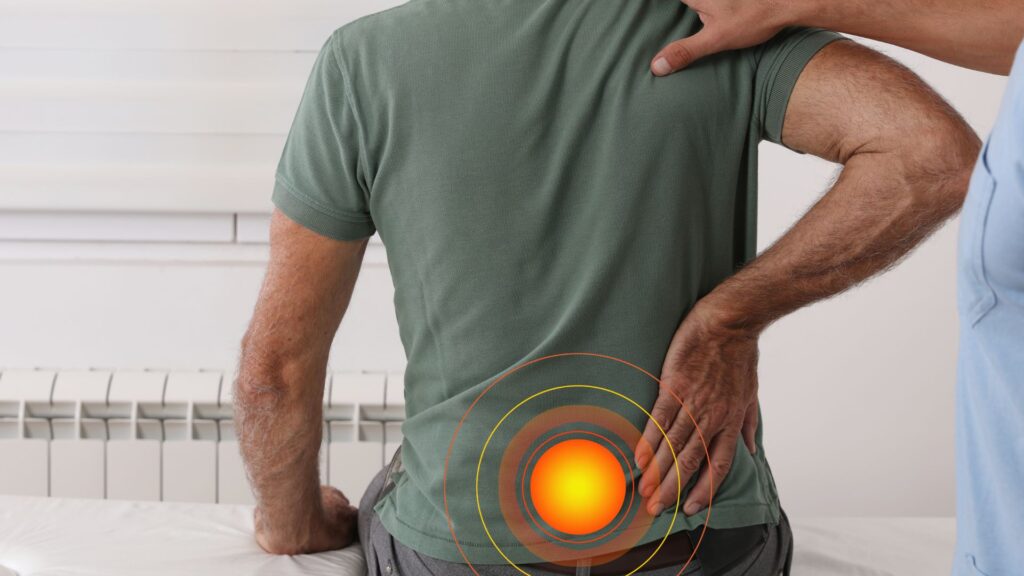
A herniated disc occurs when the soft inner material of a spinal disc pushes through a tear in the outer layer. Spinal discs sit between the bones of the spine (vertebrae) and act as cushions that absorb shock and allow the spine to move.
Each disc has a soft center called the nucleus pulposus and a tough outer layer called the annulus fibrosus. When the outer layer weakens or tears, the inner material can bulge or leak out.
If the herniated disc presses on a nearby nerve, it can cause pain, numbness, or weakness. Herniated discs most commonly occur in the lower back (lumbar spine) or neck (cervical spine).
Symptoms
Some people with a herniated disc have no symptoms. When symptoms occur, they depend on the location of the disc.
Common symptoms include:
Lower back or neck pain
Pain that radiates into the arms or legs
Sciatica, or shooting pain down the leg
Tingling or numbness in the arms, hands, legs, or feet
Muscle weakness in the affected limb
A herniated disc in the lower back may cause pain in the buttocks, legs, or feet. A herniated disc in the neck may cause shoulder pain and pain that travels down the arm.
Discs that have gradually weakened over time are more likely to herniate after an injury.
Diagnosis
Diagnosis begins with a medical history and physical examination. A doctor will check strength, sensation, reflexes, and movement to identify possible nerve compression.
Tests that may help confirm the diagnosis include:
MRI scans to view soft tissues and detect disc herniation
CT scans to evaluate spinal structures
CT myelograms when MRI cannot be performed
These imaging tests help determine the location of the herniated disc and whether nearby nerves are affected.
Treatment Options
Conservative (Non-Surgical) Treatment
Most herniated discs improve with non-surgical treatment.
Common treatment options include:
Rest and activity modification
Over-the-counter pain medications
Physical therapy to strengthen supporting muscles
Epidural steroid injections to reduce inflammation around nerves
Surgery may be recommended if symptoms are severe, persistent, or if there is significant nerve compression causing weakness or loss of bowel or bladder control.
When to Seek Evaluation
Persistent lower back pain, neck pain, or radiating nerve pain should not be ignored. Early evaluation allows for proper diagnosis and targeted treatment, helping prevent progression and long-term complications.