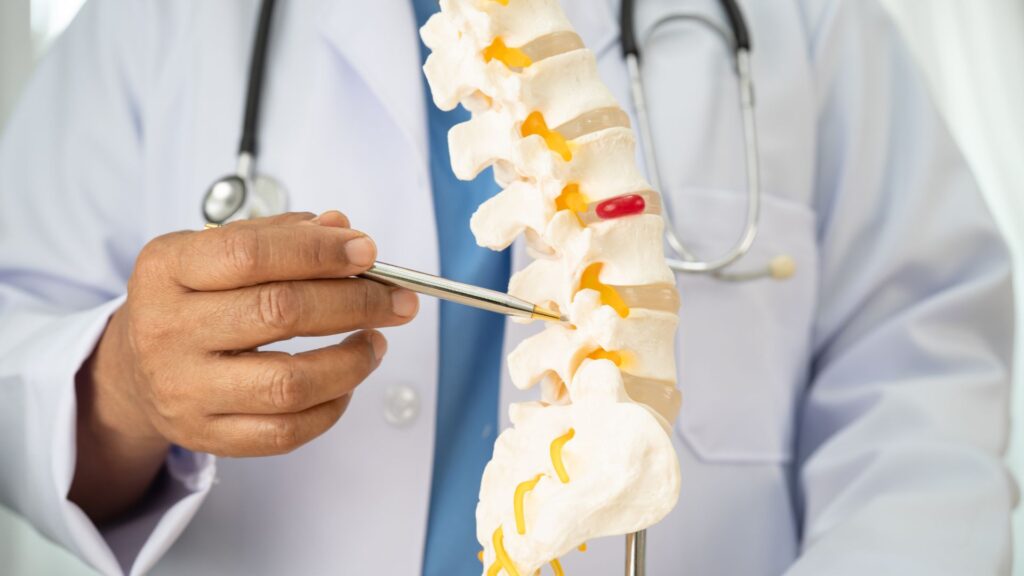
An annular tear is a small tear in the outer layer of a spinal disc. The spinal discs sit between the bones of the spine (vertebrae) and act as cushions that absorb shock and allow the spine to move.
Each disc has a tough outer ring called the annulus fibrosus and a soft inner center called the nucleus pulposus. When the outer ring develops a tear, the inner material can sometimes leak outward. This can irritate nearby nerves and cause pain.
Annular tears most often occur in the lower back (lumbar spine) but can also develop in the neck.
Symptoms
Some annular tears cause no symptoms. When symptoms occur, they may include:
Lower back or neck pain
Pain that radiates into the arms or legs
Tingling or numbness in the arms, hands, legs, or feet
Muscle weakness in the affected area
Pain that worsens with sitting, bending, lifting, or twisting
If a nearby nerve becomes irritated, pain may travel down the leg (sciatica) or down the arm.
Epidural steroid injections to reduce inflammation
Early treatment focuses on reducing inflammation, relieving nerve irritation, and restoring normal movement patterns.
Surgical Treatment
If symptoms persist despite conservative care, surgical intervention may be considered. Minimally invasive procedures may be used to decompress an irritated nerve or stabilize the affected disc. Surgery is typically reserved for severe or persistent cases.
When to Seek Evaluation
Persistent lower back pain, neck pain, or radiating nerve pain should not be ignored. Early evaluation allows for proper diagnosis and targeted treatment, helping prevent progression and long-term complications.
A small tear in the tough outer ring (annulus fibrosus) of a spinal disc. It can allow the soft inner material of the disc to leak outward, which may irritate nearby nerves and cause pain.
No — some annular tears cause no symptoms at all. When symptoms do occur, they typically include back or neck pain, and sometimes pain that radiates into the arms or legs.
Yes. If the tear irritates a nearby nerve, pain can travel down the leg (similar to sciatica) or down the arm, depending on whether the tear is in the lower back or neck.
Treatment usually starts conservatively with physical therapy, activity modification, and anti-inflammatory medication, with injections or other options available if pain continues.