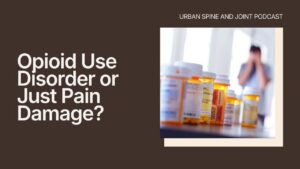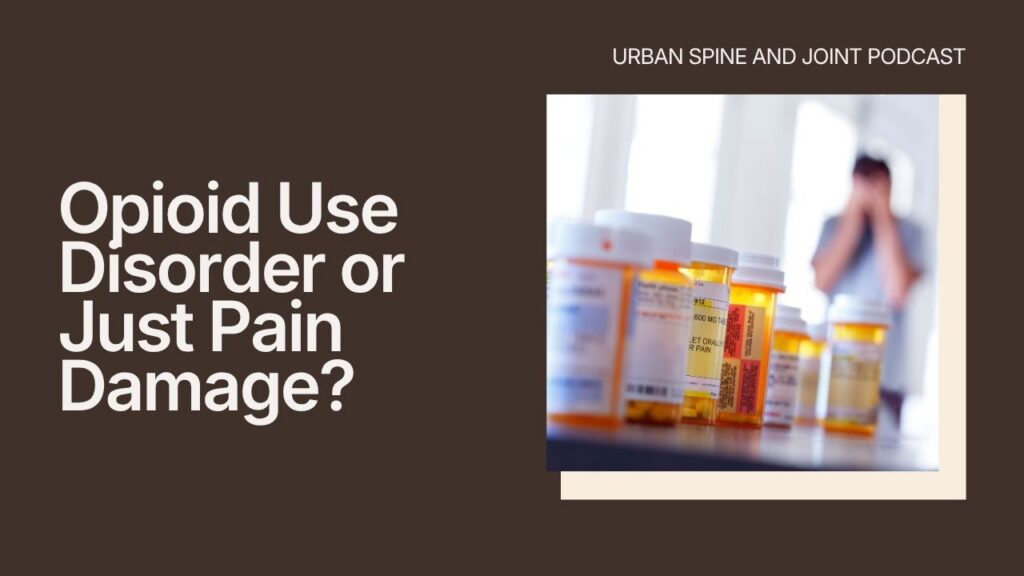
Treating chronic pain is rarely straightforward. Unlike a routine infection that improves predictably with medication, chronic pain management often requires long-term treatment strategies that come with significant medical and psychological considerations. In this episode, Urban Spine and Joint explores the complex relationship between opioid medications, physical dependence, and opioid use disorder (OUD).
Podcast Overview
This episode focuses on the important distinction between normal physiological dependence on opioid medications and the clinical diagnosis of opioid use disorder. The discussion explains how the body naturally adapts to long-term opioid use, why tolerance and withdrawal do not automatically indicate addiction, and how healthcare providers identify true behavioral warning signs associated with OUD.
Listeners also learn about pseudo addiction, a condition where untreated severe pain can mimic drug-seeking behavior, making diagnosis even more challenging. The episode further explores screening tools, medication-assisted treatment (MAT), and why open communication between patients and providers remains essential in chronic pain management.
Timestamp Breakdown
00:00 – Why Chronic Pain Treatment Is Different
The episode opens by comparing chronic pain management to more predictable medical conditions, highlighting how opioid treatment requires careful long-term monitoring and balance.
00:28 – Understanding Physical Dependence and Tolerance
The hosts explain how the body naturally adapts to opioids over time, leading to tolerance and physical dependence without necessarily indicating addiction.
00:58 – Why Withdrawal Symptoms Do Not Automatically Mean Addiction
Listeners learn that withdrawal symptoms are expected physiological reactions in patients using opioids long term and should not alone be interpreted as opioid use disorder.
01:26 – Defining Opioid Use Disorder (OUD)
The episode discusses how OUD is diagnosed based on behavioral impairment rather than physical dependence alone, including disruptions to relationships, responsibilities, and safety.
01:55 – Behavioral Red Flags Providers Monitor
The conversation outlines warning signs referenced in DSM-5 guidelines, including taking larger doses than prescribed, repeated failed attempts to stop usage, and withdrawal from normal daily activities.
02:10 – What Is Pseudo Addiction?
The hosts explain pseudo addiction, where patients experiencing undertreated severe pain may display behaviors that resemble drug-seeking despite not having opioid use disorder.
02:33 – How Doctors Differentiate Pseudo Addiction From OUD
Listeners learn that when pain is properly managed, pseudo addictive behaviors often stabilize, while true opioid use disorder continues to worsen regardless of increased medication.
03:02 – Why Screening Tools Alone Are Not Enough
The discussion highlights the limitations of screening checklists and emphasizes the importance of clinical observation, patient history, and long-term behavioral evaluation.
03:31 – Medication-Assisted Treatment (MAT) Explained
The episode explores how medications such as buprenorphine and methadone help stabilize opioid receptors, reducing cravings and withdrawal symptoms without producing intense euphoric highs.
04:26 – Why Patient Communication Matters
The hosts emphasize that ongoing communication, routine follow-up visits, and evaluating overall quality of life are critical for safe chronic pain management and early identification of misuse.
04:53 – The Future of Chronic Pain Management
The episode concludes by questioning whether future medical advances may eventually create entirely new pain treatment pathways that avoid the physiological risks associated with opioids altogether.