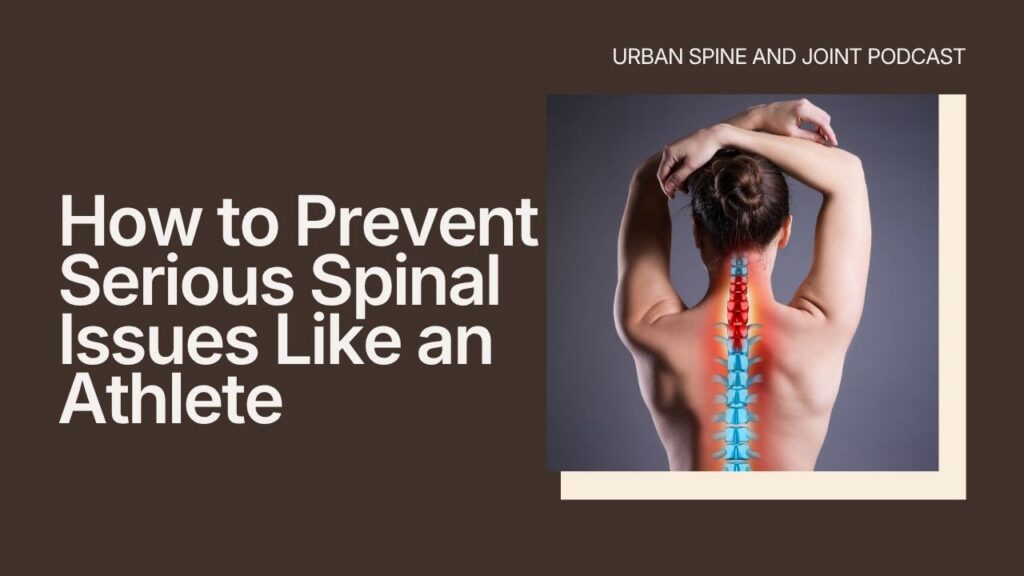
Professional athletes routinely absorb extreme physical impacts that would seriously injure most people. Yet many everyday back injuries happen during simple activities like bending down, lifting incorrectly, or twisting awkwardly. In this episode, Urban Spine and Joint explores how spinal injuries are managed on the field and why core stability plays such a major role in protecting the spine from both sudden trauma and long-term strain.
Podcast Overview
This episode focuses on two major areas of spinal health: emergency response after suspected spinal injuries and the preventative training strategies athletes use to protect their backs and necks from severe damage.
Listeners learn why medical teams follow strict immobilization protocols after potential spinal trauma, how improper movement can worsen spinal cord injuries, and why symptoms like numbness or tingling are treated as serious warning signs.
The discussion also explains how spinal protection extends far beyond neck strength alone. The hosts break down the role of the abdominal muscles, paraspinal muscles, and neuromuscular training in creating what they describe as a “natural brace” that helps stabilize the spine during movement and impact.
The episode highlights how many of the same principles used in elite athletic training can also help everyday individuals reduce preventable spinal stress and injury risk.
Timestamp Breakdown
00:00 – Why Athletes Survive Major Collisions
The episode opens by comparing high-impact athletic collisions with common everyday back injuries, raising the question of why trained athletes often recover from forces that would seriously injure most people.
00:25 – Emergency Response After a Suspected Spinal Injury
The hosts introduce the strict medical protocols used immediately after suspected spinal injuries during athletic events.
00:54 – The Importance of Neurological Evaluation
Listeners learn how medical teams evaluate airway, breathing, circulation, motor function, numbness, weakness, and spinal tenderness when assessing athletes after trauma.
01:17 – Why Tingling and Numbness Are Taken Seriously
The discussion explains why symptoms like tingling, numbness, or brief neurological changes trigger immediate spinal precautions even if the injury initially appears minor.
01:46 – Why Athletes Are Immobilized on Backboards
The episode breaks down the purpose of cervical collars, backboards, and log-roll techniques in preventing secondary spinal cord injury during transport.
02:16 – Preventing Secondary Spinal Damage
The hosts explain how improper twisting or movement after trauma can worsen unstable spinal injuries and potentially lead to permanent neurological damage.
02:45 – How Athletes Protect Their Spines During Impact
The conversation shifts toward prevention, focusing on how trained athletes develop muscular support systems that stabilize the spine during collisions and high-force movements.
03:11 – Understanding the “Natural Brace”
Listeners learn how the abdominal muscles and paraspinal muscles work together to create internal spinal stability and reduce excessive spinal movement.
03:39 – Why Neuromuscular Training Matters
The episode explains how athletes train their nervous systems to activate stabilizing muscles milliseconds before impact, helping protect the spine from sudden force.
04:04 – Combining Strength, Technique, and Prevention
The hosts discuss how proper lifting mechanics, preseason evaluations, and core conditioning all contribute to long-term spinal protection.
04:27 – What Everyday Patients Can Learn From Athletes
The episode concludes by emphasizing that the same core stability principles used by elite athletes may help reduce preventable spinal strain in daily life.