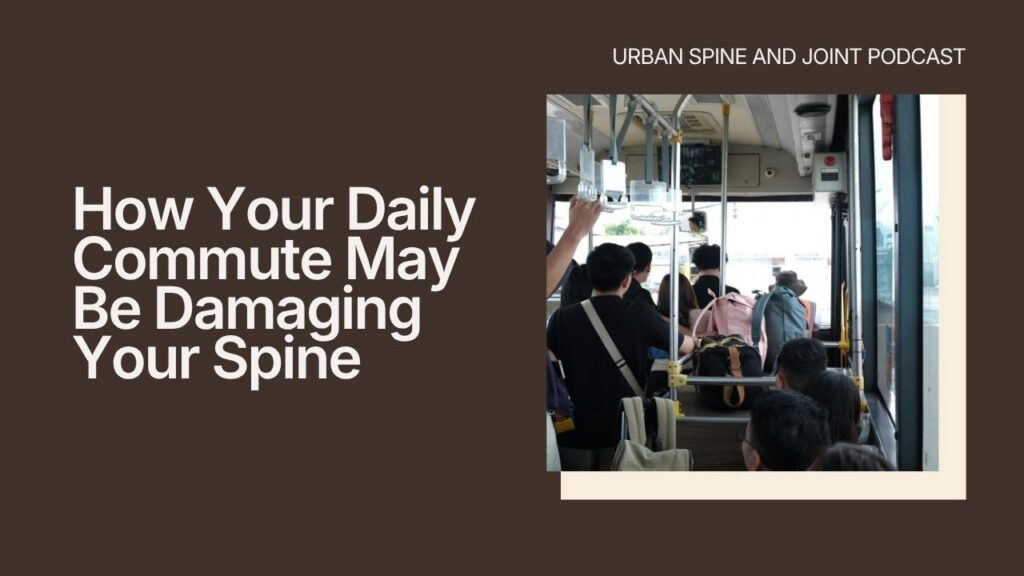
Most people think of commuting as wasted time spent sitting in traffic or on public transportation. But according to the latest discussion from Urban Spine and Joint, your daily commute may also be placing repeated physical stress on your spine in ways many people never realize.
Podcast Overview
This episode explores how long commutes, poor posture, vibration from vehicles, and extended screen use combine to create ongoing strain on the spine. The discussion focuses on the biomechanical impact of sitting in cars, trains, or buses for extended periods and explains why commuting can place more stress on spinal discs than sitting at a desk.
Listeners learn how whole-body vibration affects spinal fluid, why “tech neck” becomes even more problematic during transit, and how simple posture-based strategies may help reduce long-term spinal wear and tear.
The episode also examines the potential long-term consequences of chronic spinal compression and why preventative spinal care habits matter for daily commuters.
Timestamp Breakdown
00:00 – Why Commuting Impacts the Spine
The episode opens by describing commuting as a form of low-grade physical stress that gradually affects spinal structure over time.
00:27 – Understanding the “Biomechanical Multiplier Effect”
The hosts explain how repeated daily commuting creates cumulative stress on the body through vibration, posture, and prolonged sitting.
00:57 – Why Sitting in a Car Feels Different Than Sitting at a Desk
Listeners learn that vehicle movement creates whole-body vibration, which places a very different type of stress on spinal discs compared to stationary sitting.
01:25 – How Vibration Affects Spinal Discs
The discussion focuses on how repeated vibration and poor seating posture can squeeze fluid out of spinal discs over time, making them less resilient and more vulnerable to degeneration.
01:51 – The Added Impact of “Tech Neck”
The episode explains how looking down at phones during commutes increases strain on the cervical spine while forcing muscles to constantly stabilize the head against movement and vibration.
02:20 – What Is Postural Hygiene?
The hosts introduce the concept of “postural hygiene,” describing it as daily spinal maintenance similar to regular dental hygiene habits.
02:48 – Using Core Bracing to Protect the Spine
Listeners learn how subtle core engagement can help transfer stress away from spinal discs and toward surrounding muscles during long commutes.
03:10 – How Pelvic Tilts Help Rehydrate Spinal Discs
The discussion explains how small pelvic movements while sitting may help redistribute synovial fluid and reduce stiffness caused by prolonged compression.
04:09 – What Happens When Spinal Stress Is Ignored
The episode explores how untreated chronic spinal irritation may eventually progress to more serious nerve compression requiring advanced treatments like radiofrequency ablation.
04:38 – Why Prevention Matters
The hosts emphasize that preventative spinal care habits, including posture awareness and movement strategies, remain the best defense against long-term commuting-related spinal problems.
05:07 – Rethinking Modern Transportation Ergonomics
The episode closes by questioning whether modern transportation systems are fundamentally misaligned with healthy human spinal mechanics.