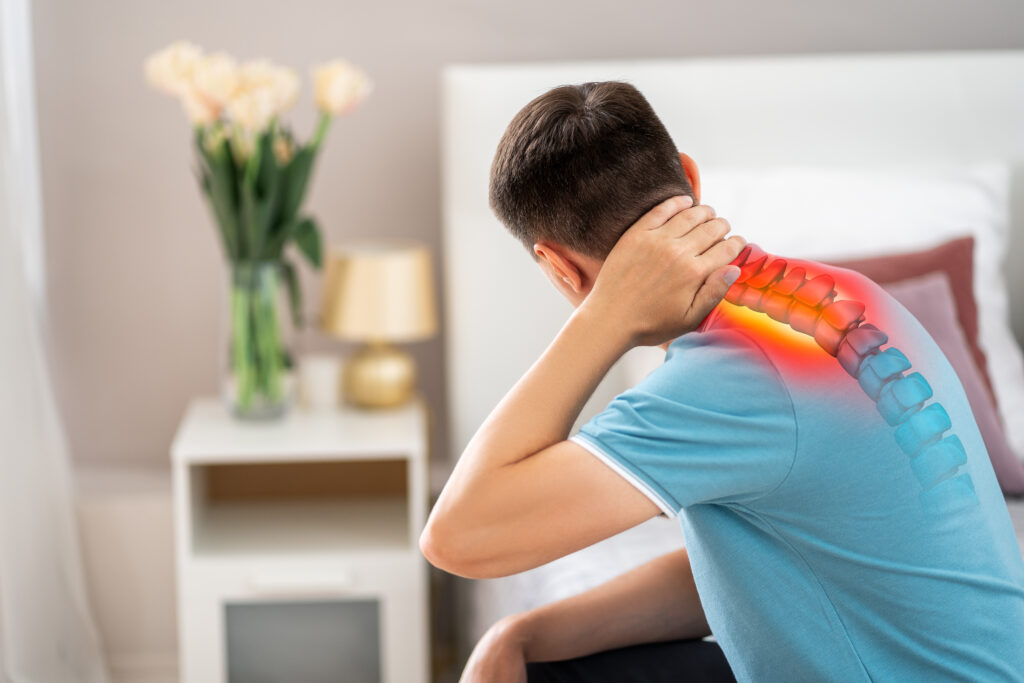
Cervical radiculopathy occurs when a nerve in the neck (cervical spine) becomes compressed or irritated. These nerves exit the spinal cord and travel into the shoulders, arms, and hands.
When a nerve is affected, it can cause pain, numbness, or weakness along the path of that nerve. Cervical radiculopathy is often referred to as a pinched nerve in the neck.
Symptoms depend on which nerve is affected but may include:
Common patterns include:
Cervical radiculopathy is usually caused by conditions that put pressure on a nerve in the neck.
Common causes include:
Risk factors include:
Diagnosis begins with a medical history and physical examination. A doctor will evaluate pain patterns, strength, sensation, and reflexes to identify the affected nerve.
Imaging tests may include:
These tests help confirm the diagnosis and locate the affected nerve.
Most cases improve with non-surgical treatment.
Common treatment options include:
Additional treatments may include:
Surgery may be considered if symptoms worsen, do not improve with treatment, or if there is significant nerve damage or spinal cord compression.
It’s often called a “pinched nerve in the neck” — a nerve exiting the cervical spine becomes compressed or irritated, causing pain, numbness, or weakness that travels into the shoulder, arm, or hand.
Symptoms depend on which nerve is affected, but commonly include neck pain, pain radiating into the arm, numbness or tingling in the fingers, and weakness — for example, the C6 nerve tends to affect the biceps, wrist, and thumb, while C7 affects the triceps and middle finger.

It’s usually caused by something putting pressure on a nerve in the neck, most often a herniated disc, though other structural changes in the cervical spine can also compress a nerve root.
Not exactly — a herniated disc is one common cause of cervical radiculopathy, but radiculopathy refers to the nerve symptoms themselves, which can also result from bone spurs or other changes narrowing the space around the nerve.
Many cases improve with conservative treatment like physical therapy, activity modification, and anti-inflammatory medication; nerve blocks or other interventions may help if symptoms persist.